

UGC’s new regulations trigger widespread discussion and debate among stakeholders
UGC’s new regulations trigger widespread discussion and debate among stakeholders
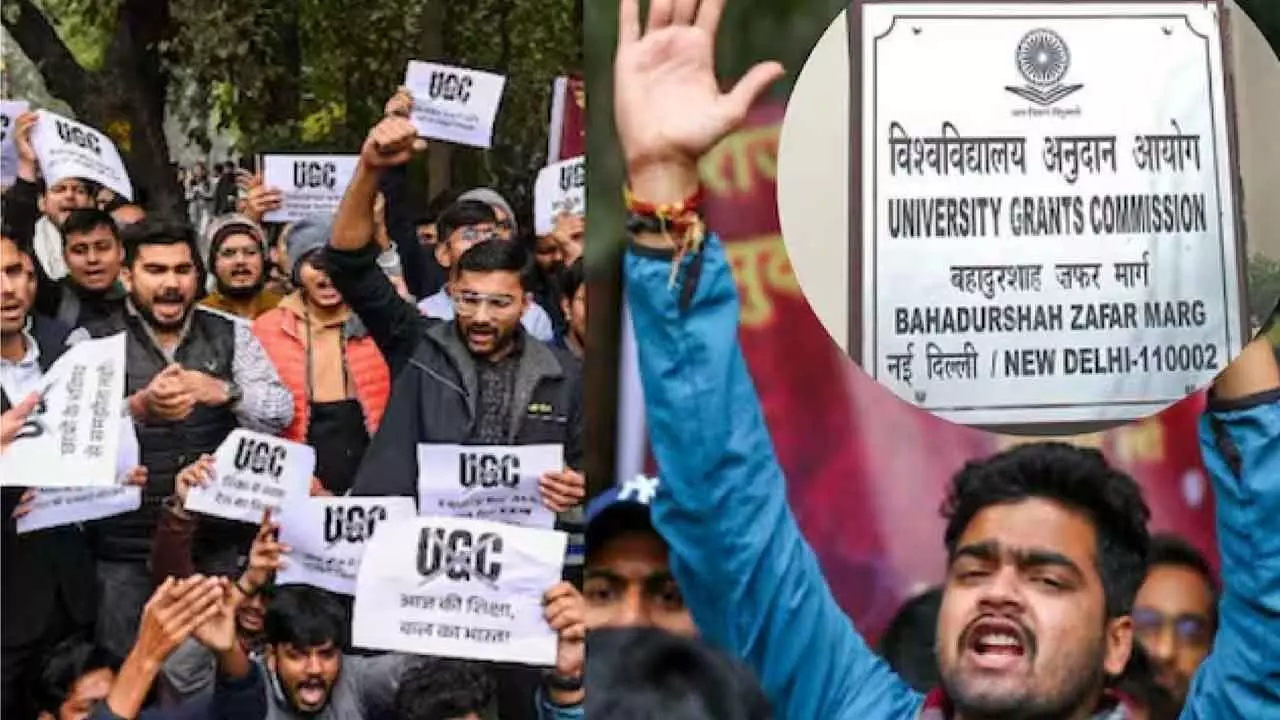
The University Grants Commission (UGC)recently notified what it refers to as the “University Grants Commission (Promotion of Equity in Higher Education Institutions) Regulations, 2026” (hereinafter referred to as the “UGC Regulations 2026”, “Regulations” or “Rules”).
While its objective is clear: “to eradicate discrimination” and “to promote full equity and inclusion amongst the stakeholders in Higher Education Institutions (HEIs)”, what is not clear is whether the Regulations will be able to achieve their objective or not.
The notified Regulations have sparked widespread discussion and debate, even protest, among the stakeholders of the higher education sector, especially the student community. This article seeks to discuss the recent development with respect to the notified regulations, along with constructive criticism from a stakeholder’s perspective.
What are the UGC regulations 2026?
The UGC Regulations 2026 are new, binding regulations issued by the UGC on January 13, 2026, superseding the 2012 Rules. They cover all Indian HEIs, inter alia, universities, colleges, and deemed universities.
It was meant to take effect upon publication in the official Gazette, but in an update, the honourable Supreme Court of India on Thursday stayed the effective enforcement of these Rules. This set of Regulations aims to eradicate discrimination and promote equity in HEIs, for which it has unveiled certain provisions to be followed in these HEIs.
What are the provisions under the 2026 rules?
To bring equity, the Rules direct every HEI to establish an Equal Opportunity Centre (EOC), which shall oversee the effective implementation of policies and programmes for “disadvantaged groups”. The EOC shall have an Equity Committee, constituted by the Head of the Institution, to manage the Centre's functioning and to investigate complaints of discrimination.
Every HEI shall also constitute a smaller body to be known as ‘Equity Squads’. Such squads are expected to remain mobile and visit the vulnerable spots frequently. Every HEI shall establish and operate an ‘Equity Helpline’ that will function around the clock and shall be accessible to any stakeholder in distress owing to any discrimination-related incident.
Prima facie, the provisions give a neutral and uplifting impression, but the real disappointment lies within the intricacies of these provisions and definitions provided in the Regulations.
What led to the widespread protest among the student community?
While provisions such as the above-stated are highly welcomed, what led to the widespread protest is the definition of “caste-based discrimination” in the Rules. A close reading of the Regulations indicates that the definition of Discrimination under Section 3(e) is neutral in scope.
It applies to “any stakeholder,” encompassing students, teaching faculty, and non-teaching staff, and expressly covers both explicit and implicit acts or omissions. But the definition of caste-based discrimination, which has been defined separately in Section 3(c) of the Regulations, involves castes, including “Scheduled Castes (SC), Scheduled Tribes (ST), and Other Backward Classes (OBCs)” only.
This selective framing risks creating a pre-assumption in society that caste discrimination is unidirectional.
In other words, it wrongfully operates on an unfounded presumption about who can be a victim and who can be an offender. It assumes stakeholders from a particular community to be a natural offender. Law is expected to regulate conduct neutrally and not to attach presumptions to social identity. The Regulations, in a way, force students to view each other not as peers, but as products of a particular caste.
Similarly, Section 5(7) mandates the representation of SC, ST, OBCs, Persons with Disabilities, and Women in Equity Committees, but does not provide for mandatory representation of general category stakeholders. We know, for a fact, that India has variety. There are HEIs in India where the general category is in minority.
This provision for non-mandatory representation of the general category might prove discriminatory and unjust to the subjects of the general category in such institutions. These omissions in the Regulations raise fundamental questions related to the representation of the general category.
Another concern is the way the Regulations define “discrimination.” The definition is very broad and does not clearly list what actions are prohibited. This leaves institutions to decide for themselves what counts as discrimination.
For instance, a hostel allotment, a classroom remark, or a delay in administrative work may be treated as discrimination in one university but not in another, even when the facts are similar. The Regulations do not explain how such situations should be judged in a consistent manner. Due to this lack of clarity, decisions may depend more on individual judgment than on clear guidelines.
The Regulations also do not provide any system to ensure that institutions apply these standards uniformly. When a law meant to prevent discrimination is unclear, it can itself lead to unequal treatment. Clear rules are necessary so that protection does not depend on who is interpreting the law.
Further, while the Regulations place strong emphasis on protecting complainants, they remain largely silent on safeguards for respondents. There is no clear provision ensuring confidentiality, privacy, or protection from reputational harm for those accused during the inquiry process or for sufferers of false and malicious complaints.
In academic settings, even preliminary allegations can have long-term professional consequences. Additionally, earlier draft versions contained provisions relating to penalties or suspension of proceedings in cases of false or malicious complaints, but these safeguards are absent in the final text.
The failure to address the possibility of misuse creates a significant inconsistency and may undermine confidence in the grievance-redressal mechanism.
While the idea behind the disposition of cases within 15 working days is appreciated for the sake of speedy justice. But speedy justice should not come at the cost of fairness. It is said that “If justice delayed is justice denied, then justice hurried is justice buried”.
Therefore, a reasonable time must be given to the authorities to enquire properly and to consider all facets of the case. What if a false or malicious report is made out against a person, and due to the strict timelines of the UGC Rules to dispose of cases, an innocent person gets convicted? This is at odds with the core intent behind the Indian judicial system.
The Regulations are clearly driven by a legitimate and necessary objective, to address historical injustice and remove discrimination from higher education institutions, but is non-mandatory representation and lack of safeguards to stakeholders of a particular community truly justified? That remains an adverse concern and can put us at risk of “reverse discrimination”.
Way forward
While the Regulations reflect a sincere and necessary effort to eliminate discrimination and promote equity across HEIs, they must also balance protection with fairness.
What could make the current situation better is that the 2026 Rules should be made such that it applies equally to all students and staff, regardless of caste, as the definition of discrimination already includes discrimination on the basis of caste.
Another way could be adopted by making the definition of caste-based discrimination all-inclusive. It must not miss out on a single category, such as the general/unreserved category. The idea of speedy justice is welcomed, but it should not be made a threat towards fairness.
P. N. Bhagwati also said, “Equality is the antithesis of arbitrariness”. Therefore, a reasonable time must be given to authorities to properly investigate every aspect of the reported case rather than quickly disposing of the case for the sake of quick justice.
The central belief of the Indian judicial system has always been to protect the innocent. But this belief dies the moment such prompt timelines are imposed. Finally, there should also be a clear mechanism to deal with false or malicious complaints.
While protecting genuine victims is essential, the absence of safeguards against knowingly false allegations can harm innocent individuals and weaken trust in the grievance process. A balanced law must discourage misuse without deterring genuine complaints.
Without such a balance, even well-intentioned regulations risk losing their moral and constitutional force. A law meant to cure inequality must not create new fractures; equity succeeds only when fairness walks beside it.
(The authors are first-year B.A.LL.B. (Hons.) students at Maharashtra National Law University, Nagpur)





